Sunday, 14 July 2013

Umpiring the Ump

What a great game of Test cricket at Nottingham! If there ever was a need for an advertisement of Test match cricket, here was one. Notably, we seem to be getting quite a few of these of late. In fact, Test match cricket has become so interesting in the modern day that the case for getting rid of it now seems increasingly absurd! What is equally absurd though is the case for extending the failed DRS or Decision Review System. England won't be complaining about the DRS at all, considering that it has won them the first match this Ashes. It's almost intriguing too that the tides of the DRS - a system so staunchly supported by viewers and experts in England - always seem to favor the Poms!

Frankly speaking, the DRS is a failed mechanism. Although novel when introduced, the system has been disappointing in adding flavor to the game. Let's face it - the DRS has taken the zing out of this particular Test match for both sides. The umpires have been allowed far less sleep after its inception and captains now spend as much time training their players on umpiring as they do on batting, bowling or fielding! There are technical issues with the DRS as well, I hear, but I have enough complaints against it without having to even touch on those.

Crossing his heart: Umpire overturning a decision
Firstly, as hard as it is for the system's supporters to admit this, players are not exactly great umpires and they certainly aren't great umpires when they're playing for their country and are fighting for sporting glory. They don't have to be either. Even if they were great umpires, there is enough stress on them to perform their playing duties without having to watch the lines, predict leg-befores or sense faint edges. Why all this fuss? If the umpire can't do his job all so well, how can the players be expected to do it? After all, when the ball is being bowled, the umpire has nothing else to do but watch closely and make decisions. He's paid for it and he's expected to be good at it. If part of his job is being given to the player, you might as well start allowing umpires play for their teams on the field as well!

My second grievance with the DRS is the fact that the umpire's authority on the field is essentially being challenged by it. An umpire is a match official. He is above and beyond the players and therefore, it is his duty to ensure that the game is played fair and square. As much as we universally agree that an umpire is a human being and is hence entitled to make his fair share of mistakes, no umpire likes to know when his decision is wrong. No umpire likes to overturn a decision. It is no coincidence then that when an umpire overturns a decision early in the match, he suddenly starts looking so ordinary for the rest of the game. No, it messes with the morale of the umpire. He does not feel authoritative anymore and when an umpire does not feel like an authority, he almost loses the ability to stand above and beyond the game of cricket he officiates in, thereby becoming unable to ensure that the game is played fair and square. After all, that is his primary duty, without which, in the age of technology, there is no need for him to stand with a hat on his head all day.

My third grievance is quite clear cut. When an umpire has a bad day and gives an absolute howler of a decision at a crucial juncture in a match (like Aleem Dar did with Stuart Broad) and when the team at the receiving end has run out of reviews to challenge him (like Australia did in the same episode), the DRS effectively fails. The DRS, I hope, wasn't formulated in order to check the umpiring skills of players and captains and penalize them for default on that front. It was, again I hope, formulated in order to arrive at the right decision. In the above instance, the right decision certainly wasn't arrived at. At the end of the game, that particular instance proved to be quite decisive and Australia, therefore, in a way lost this match due to their poor umpiring skills. So how then did the DRS prove to be a success?

My case is not to call for a return to the previous status quo. What world cricket needs is to stop reviewing the umpire and allow the umpire review for himself. It must become more of a convention - perhaps even part of the training of umpires - to use technology by on-field discretion when you're in doubt. Also, when an on-field umpire makes a call which violates all common sense and is clearly obvious to the man assisted by technology (which is the third umpire), the latter must make an intervention and ask the on-field umpire to correct his call. In this way, the umpires are not made to lose their authority and nor are they challenged, and eventually, the correct call is made every single time. The players are also relieved of their umpiring duty and can now play the game without a fuss.

When the DRS was introduced, many people called comparisons with tennis and invoked the great success of the review system in that game. Unfortunately, cricket is not tennis. Cricket involves far more complex variables and there is nothing really clear cut about it. So it's time to let the umpires do their job without wreaking any further havoc.

Friday, 5 July 2013

Wimbledon 2013 - Still anybody's game

I'm a bit late on my blog post on Wimbledon this year - one of my most favorite sporting tournaments. What makes Wimbledon so special is, of course, the court. Not many lawn tennis tours in the modern day are really played on lawn. The reason is pretty obvious - lawn courts are terribly difficult to maintain in pristine condition. This year's Wimbledon just proved how difficult maintaining lawn courts can be. In what later became an unfortunate incident, the All England Lawn Tennis Club's main groundsman retired last year. Perhaps not so coincidentally, everyone playing at SW19 this year have been slipping and sliding on some lush grass. To be frank, as a viewer of Wimbledon this year, I've felt at times as though I was watching an ice skating show, not so much the showpiece event of world tennis. From Maria Sharapova to Victoria Azarenka, tennis stars have been falling flat on the ground. Perhaps the nastiest fall of them all was suffered by Juan Martin Del Potro during his quarterfinal game against Spaniard David Ferrer. Luckily for Del Potro, his 6'6" height means that the court is only three steps wide, so he later decided that he would win the game without having to sprint after the ball at all.

The Fancied Quartet: All back home
Slippery or not, lawn generally is hailed as the surface that separates the legends from the lads. To win on grass, one needs a sharp and accurate serve, some great court sense and a rather cool head. Blind slapping won't work here. Perhaps that explains why the genius of Roger Federer held sway over The Championships for so long, winning the title seven times! That's what makes lawn tennis so exciting - a moment of callousness can cost you a game, a set, maybe even a match. And so, even though I'd blogged last year about Wimbledon being anybody's game, one year on, nothing much has changed about that theme. In fact, things have only gotten eerier! Rafael Nadal, flying to London after winning Roland Garros for the eighth time, was put on a flight back to Mallorca very early by an unheard Steve Darcis. Maria Sharapova, the powerhouse of female tennis, slipped, skated and slid out in the first week as well. Victoria Azarenka barely put a foot on court before packing her bags due to injury. Defeat also greeted Caroline Wozniacki early in the tourney with the Dane blaming the grass for her undoing. Serena Williams - a player so dominant that Andy Murray thought of challenging her to play him - lasted long enough to dominate the little known players in the first week but bowed out in the quarters against a reinvented Sabine Lisicki. But perhaps the greatest upset of them all - Roger Federer, holder of every known record in Wimbledon and world tennis history, crashing out in the second round to Sergiy Stakhovsky. Stakhovsky may well make it to many a quiz question in the near future if Federer decides to retire anytime soon.

What really made the difference this year? Was it the grass? Was it a dying old generation? Or was it simply the growing prowess of unknown names in world tennis? The answer to me seemed fearlessness. While many big guns seemed hounded by their past glory and pressed by intimidating expectations, the little unheralded kids of world tennis played a freewheeling brand of tennis largely unseen in past years and highly suited for lawn courts. Sabine Lisicki's defeat of Serena Williams was particularly revealing on that front. With the big American expected to steamroll the unfancied German with a barrage of aces and whizzing winners, Sabine let loose her passions on court and played particularly aggressive tennis with little regard for the scoreboard.

Perhaps the grass was rather slippery. But then again, it was the same old grass for Sabine Lisicki and Del Potro as it was for Rafael Nadal or Serena Williams. Grass often tends to favor the brave. For that reason, the hallowed lawns of Wimbledon would probably always be for anybody's taking.

Friday, 21 June 2013

Champions Trophy 2013 - Unveiling the Champs

The last couple of weeks in the UK have been most entertaining! Now we are down to the top two sides in the competition who will fight for the honors this Sunday in Birmingham. No surprises though that it's India v England. One side has been on top form on home soil, warming up for the Ashes. Their new ball bowlers have weaved magic and made it swing so much that some even doubt ball tampering. Their batsmen have been solid, although they've often been accused of letting down the anchor while trying to sail. The other side has been a revelation. Their batsmen have struck rich form and one Mr. Shikhar Dhawan has even rendered heartfelt tributes of "we miss you" to Virender Sehwag irrelevant. Gautam Gambhir too has been forgotten with Rohit Sharma deciding that it's about time he unraveled his own little kit of tricks. There are two wicketkeepers in this side - one of them can even bowl, apparently - and plenty of predators on the field. What's more, they even have a man who can legitimately call himself "Right Arm Fast"!

Boys in Blue: Dhoni's Army
This is a different Team India on display. I remember those long gone days of old when I'd never expect two consecutive victories from the Indian team anywhere. If I saw one good, comprehensive display of cricketing prowess from them, I'd brace myself for a drubbing the next day. But this Indian team has been a spectator's delight. They've made an initially suspect bowling attack look menacing courtesy of some brilliant fielding. Batsmen seem frightened to score runs. Let's simulate - if you're a batsman taking guard against Team India in the CT 2013, you will find Ravindra Jadeja and Virat Kohli on either side of you. Dinesh Karthik and Rohit Sharma lurk just beside them. Turn around and you'll spot MS Dhoni, arguably the best keeper in the world right now. Try to beat him with a cheeky shot through the slips and you're most likely to find the safe hands of Suresh Raina. Notwithstanding that, also good luck to you trying to middle the seaming ball delivered by Bhuvneshwar Kumar! The Indian batting, too, has been spectacular. No one has yet been able to conjure up a reason why Shikhar Dhawan and his mates have consistently scored at 6 RPO or thereabouts in conditions where everyone else celebrates anything over 250!

England, the other finalists, are perhaps just as deserving. Their new ball attack has excited the English connoisseur of old and a certain James Tredwell has ensured that the injured Graeme Swann isn't missed. Their batting is solid, indeed, but as some people reckon, perhaps a bit too solid for the standards of modern-day limited overs cricket. One man has impressed me above all and that's young Joseph Root - the 22-year-old Yorkshireman who has lived up to the legacy of his county. Geoff Boycott is in awe of this kid and has made that sufficiently apparent on all given occasions. But what makes Root special to me is his versatility. While he ground out a 229-ball 73 in his debut Test match in India a while back, he showed the ability to hit a 55-ball 68 against Sri Lanka in London a few days back, even exhibiting a little lap shot while he was at it.

Undoubtedly then, we have in the finals of this Champs Trophy the two most potent teams of the competition - and by far. What really strikes me about this tournament, however, is the fact that most teams are currently under transition. India came without Sehwag, Zaheer and Tendulkar. South Africa arrived without Kallis and Smith. Pakistan left out Afridi and Umar Gul. New Zealand have only recently reinstated Ross Taylor and Daniel Vettori, almost on a farewell note to the latter. England have played without Andrew Strauss and Kevin Pietersen, the latter out due to injury. Australia have, of course, lost their long list of legends - Ponting and Hussey the latest of those. In other words, save for the calypso boys of the Caribbean (even they're slowly evicting Ramnaresh Sarwan out of the side), everyone else was waving goodbye to one great man or the other walking off into the horizon.

How then have India and England left the others so far behind? The most plausible answer seems to be captaincy. India and England seem the only sides with stable, seemingly permanent, captains at the helm. There has been no threat whatsoever to the authority and influence of MS Dhoni and Alastair Cook over their side. In many ways, this Team India seems to have been built by MS Dhoni. Much like Imran Khan and Steve Waugh, Dhoni is the seniormost member of his team, both by age and by experience. Following the two whitewashes in England and Australia, Dhoni went about identifying a young, exuberant team and stuck with them with dogged faith. The likes of Rohit Sharma have repaid him kindly so far. Other teams have lacked such a stable, influential captain. For New Zealand, Brendon McCullum continues to be haunted by the ghost of Captain Ross Taylor. Sri Lanka have at least 3-4 former captains in their playing eleven. West Indies have only recently replaced Darren Sammy with Dwayne Bravo. Australia's Michael Clarke has been watching from the sidelines with a back ache. Pakistan seem to have a new captain every series - they want to give everyone a chance, I suppose. And that leaves only AB de Villiers of South Africa, himself an unaspiring leader, if one were to believe what is often reported.

Dhoni and Cook, in contrast, have served their teams well. They've captained their ships with great inspiration and their fans have shown tremendous faith as well. This should be an exciting final. The champs shall be unveiled.

Monday, 27 May 2013

IPL 6 - India XI

The IPL season is now over and amongst all the murk, the Chennai Super Kings have faltered at the final hurdle. Sachin Tendulkar does the wise thing and retires from T20 cricket, being carried off by his jubilant Mumbai mates at the Eden Gardens. I'd posted a handpicked all-star XI a few days back. The team generated fair amount of enthusiasm and there were calls that I also make an all Indian XI for the IPL 6 season. There is no guessing how hard this one was. With all the stars going around, hogging the limelight, Indians are left with little time in the spotlight. However, there were one or two names that broke barriers and raised eyebrows. So on popular demand, here's my India XI:

1. Shikhar Dhawan:

(Mat: 10, Runs: 311, HS: 73*, SR: 122.92, 50s: 3)

Few Indian openers at the IPL 6 flourished consistently enough to make an impact. It was all about the Gayles and the Husseys and to a certain extent, Dwayne Smith as well. The big Indian guns Virender Sehwag and Gautam Gambhir were miserable failures, although Sehwag did make a cameo 95* the moment Sir Viv Richards arrived at the Delhi dugout. But Shikhar Dhawan was by far the most successful India opener, pipping his Sunrisers partner Parthiv Patel to make my India XI.

2. Rahul Dravid (c)

Shooting at the Wall: Rahul Dravid at a presser
(Mat: 18, Runs: 471, HS: 65, SR: 110.82, 50s: 4)

A disputable decision to have Rahul open the batting alongside Shikhar Dhawan but his captaincy over the season has proven to be too valuable for the Rajasthan Royals to ignore. Going at a decent strike rate and standing solid as a rock (as always) Dravid bags the captaincy tag here, as he did in the all-star XI and is a worthy candidate to play the sheet anchor's role while the others go crazy around him. His calming influence in the top order will be more than handy.

3. Virat Kohli

(Mat: 16, Runs: 634, HS: 99, SR: 138.73, 50s: 6)

Kohli was made 12th man in the all-star XI, missing out to the magic hitting of David Miller, but there was no doubt in my mind that he'd be at No. 3 in the India XI. Kohli is a useful asset in any side in world cricket and his steady batting alongside the storm that was Chris Gayle and the genius that was AB de Villiers carried the Royal Challengers through the tournament.

4. Suresh Raina

(Mat: 18, Runs: 548, HS: 100*, SR: 150.13, 100s: 1, 50s: 4)

Arguably the best Indian T20 batsman, Raina's fireworks combined with Mike Hussey's class took CSK all the way to their fifth finals. With Raina and Hussey falling cheaply in the finals, CSK found themselves in a real hole. Testimony to the importance of Suresh Raina in the Chennai setup.

5. Rohit Sharma

(Mat: 19, Runs: 538, HS: 79*, SR: 131.54, 50s: 4)

The IPL-winning captain finds a place at No. 5. For many years now, Rohit Sharma has earned himself the reputation of being the Golden Boy who never discovered himself. In a competitive playfield, Rohit Sharma has lost out to many lesser talented batsmen in Team India. But along with Dinesh Karthik, the captain lent stability to the Mumbai Indians' middle order, allowing Kieron Pollard to burst out at the other end.

6. MS Dhoni (wk)
Helicopter: MS Dhoni taking flight

(Mat: 18, Runs: 461, HS: 67*, SR: 162.89, 50s: 4, Ct: 15, St: 2)

No doubts on this one. Best wicketkeeper in the world, best limited overs batsman, coolest customer in world cricket. MS Dhoni decides when a match should end and how. Unfortunately, he dropped himself far too low down the order in the finals (a decision he has made on too many occasions now) and found himself having only Ravi Ashwin for company. He's the finisher of this India XI. Hopefully, Rahul Dravid will send him in earlier in crunch situations!

7. Ravindra Jadeja

(Mat: 18, Runs: 201, HS: 38*, SR: 148.88, Wkts: 13, BB: 3/20, Ave: 24.84, Econ: 7.48)

This was a decision between Jadeja's bowling magic versus Stuart Binny's hitting prowess, but Sir Jadeja's golden arm helps him take the all-rounder's position. Jadeja's batting hasn't quite fired in the recent past. However, considering his exploits with the ball and the strength of the batting order here, Sir pips Stuart Binny to take the No. 7 spot.

8. Vinay Kumar

(Mat: 16, Wkts: 23, BB: 3/18, Ave: 21.43, Econ: 8.19)

VK did a grand job for the RCB, bowling his heart out each time he got the ball from Virat Kohli. In a side that was otherwise far too dependent on the batting, Vinay Kumar provided some moments of magic with Ravi Rampaul, saving matches, taking wickets and prolonging games into the super over. He also had the purple cap on his head for a little while.

9. Bhuvneshwar Kumar

(Mat: 16, Wkts: 13, BB: 3/18, Ave: 28.53, Econ: 6.50)

Like I'd mentioned in my all-star XI, when Chris Gayle went bonkers at the Chinnaswamy during his 175*, Bhuvi walked off the field with seemingly unreal figures: 4-0-23-0. In other words, an economy rate of 5.75. To know the obvious significance of that performance, check the scorecard. But for Bhuvi, perhaps RCB would have made 300 that night! That wasn't a one-off occurrence. Bhuvi's now famous swing bowling abilities kept pinch hitters at bay for the Pune Warriors all through the season, helping them finish one above the bottom rung. He'll be a handful with the new ball for sure!

10. Amit Mishra

(Mat: 17, Wkts: 21, BB: 4/19, Ave: 18.76, Econ: 6.35, 4w: 1)

Amit Mishra's name is no surprise here. Having made it to the all-star XI along with Sunil Narine, Mishra will now shoulder spin bowling responsibilities with Ravindra Jadeja. His new found confidence from the Sunrisers' fruitful season certainly would help him on the field!

Super King: Mohit Sharma
11. Mohit Sharma

(Mat: 15, Wkts: 20, BB: 3/10, Ave: 16.30, Econ: 6.43)

The only real surprise perhaps in this India XI lineup. Indian seamers have never really been the most threatening at the IPL, save perhaps the odd moments of magic from Ishant Sharma and Zaheer Khan. But for the CSK, as Andy Bichel had said, Mohit Sharma was the big find. With good broad shoulders and a nice easy run-up to boot, Mohit ended up taking a mind blowing 20 wickets in his debut season from 15 games at a commendable average. Easily the find of the season.

12th Man: Dinesh Karthik

(Mat: 19, Runs: 510, HS: 86, SR: 124.08, 50s: 2, Ct: 12, St: 2)

As was the case with Virat Kohli in the all-star XI, Dinesh Karthik is perhaps unlucky to find himself as the 12th man of this team. However, given Raina's and Rohit Sharma's greater consistency in the tournament and MS Dhoni's natural wicketkeeping abilities, Karthik - as is often his case in Team India - will have to stay satisfied on the bench for the while. Unless, of course, Rahul Dravid decides to draft him into the playing eleven!

Thursday, 23 May 2013

IPL 6 - My XI

It's becoming customary now to name IPL XIs at the end of each season. I did this last season so I'm going to try and do it again. Remarkably though, choosing an IPL XI seems harder this season than it seemed last year. There were roller coasters in store and surprises everywhere. 2012 table toppers took the wooden spoon and the defending champions didn't even make the playoffs. There are two more games to go in this year's IPL - the Qualifier II and the Final - but I've decided to go in with my XI now anyway. Readers must take note that to condense 9 teams down to 11 players is hard work. And I've also made an exception to the four-foreigners-only rule in order to do justice to those who put their best foot forward irrespective of nationality. So here goes -

1. Christopher Gayle
Hail the Pirate: Chris Gayle after his 33-ball 100


(Mat: 16, Runs: 708, HS: 175*, SR: 156.29, 100s: 1, 50s: 4)

A no-brainer, for the second time in a row. Only a very adamant hater of Chris Gayle (how can you hate this man?!) can keep this Jamaican bully out of his T20 XI anywhere in the world. For the record though, I'm becoming a greater admirer of Chris Gayle with every passing day! Leave alone his Stick Cricket style 175* that made the Pune Warriors look like a bunch of toddlers trying to have fun in the park; what makes Gayle special to me is the amount of calm he brings to the crease in the adrenaline junkie's world of T20. Being an opening partner to Chris Gayle must be quite some experience, I'm sure!

2. Michael Hussey

(Mat: 16, Runs: 732, HS: 95, SR: 129.78, 50s: 6)

I'd mentioned last season that choosing Chris Gayle's opening partner was a hard one. Mr. Cricket just made that job a whole lot easier for me this time round. Who said old men can't play T20? This recently retired Aussie is 38 years old for all those who thought he's only 25. He's not the bully that Chris Gayle is, nor the grafter that is Rahul Dravid. What makes Mike Hussey special is his ability to adapt and invent to all forms of cricket, anywhere, anytime. After a long drawn battle with Chris Gayle for the orange cap, this Australian legend finally snatched it and for that, I put him in as his opening partner. Meanwhile, some young Australian men are on their flight to England, looking for a man who can win them back the Ashes.

3. Rahul Dravid (c)

(Mat: 17, Runs: 428, HS: 65, SR: 110.30, 50s: 4)

Many were surprised when I included Rahul Dravid as my captain last year. Be prepared to be shell-shocked because I've retained him for the second time in a row. When Twenty20 was invented back in England, the last person they had in mind as a possible exponent of this game was Rahul Dravid. For four years, he struggled in the IPL, facing flak and being written off. But then he bounced back to show the world why he's such a legend. Dravid's captaincy of the Rajasthan Royals has been inspirational to say the least. Inheriting from Shane Warne perhaps the most underwhelming squad in the IPL, Dravid has reinvented his old tentative leadership tendencies to become a more free-wheeling, self-believing captain, taking his side into the playoffs quite comfortably. What Dravid has done particularly well this season is to divide responsibilities equally on all, thereby allowing the big Shane Watson to play more freely. His uninhibited faith in young kids like Sanju Samson, Stuart Binny and James Faulkner has been quite a revelation. He's now officially in charge of my XI!

Devil's Food: de Villiers feeding on some bowling
4. AB de Villiers

(Mat: 14, Runs: 360, HS: 64, SR: 164.38, 50s: 2)

He's been retained for the second time in a row, once again a no-brainer. If there's one man who can do it all on a cricket field, it's AB de Villiers. Want to bat out two days and save a Test match? Call AB de Villiers. Want to tonk Dale Steyn around the park in the dying hours of a T20 match? Call AB de Villiers. Want a safe pair of hands and an athletic live wire at backward point? Call AB de Villiers. Injured your wicketkeeper and want someone to take on the big gloves? Call AB de Villiers. I had a good mind to make AB de Villiers my wicketkeeper for the second season on the trot but then decided that there's another wicketkeeper who deserves that role more. But it's a privilege to have a finisher of the class of ABD in your side and now I can call 17 for all kinds of emergency!

5. MS Dhoni (wk)

(Mat: 17, Runs: 398, HS: 67*, SR: 167.22, 50s: 3, Ct: 13, St: 2)

Here comes the world's finest wicketkeeping genius! Two World Cup wins, five IPL finals, two trophies (the third one will be played out for on Sunday), a Champions League cup - this man has got to be the most prolific captain that India has ever had. In fact, some may say it's criminal for me not to make him my captain! But for Rahul Dravid's brilliance with a little known team, MSD would have made it to the tag. The jury's out on which one of the two is the better captain of IPL-6. All said and done, MSD and ABD are a formidable pair of finishers to have in any side in the world, in any form of the game.

6. David Miller

(Mat: 12, Runs: 418, HS: 101*, SR: 164.56, 100s: 1, 50s: 3)

Surprise, surprise! I had quite some dilemma in my mind taking a call on this one. It was Dinesh Karthik vs David Miller, although not for the same role. If DK were in my side, he'd probably bat higher up the order, pushing ABD and MSD to 5 and 6. Karthik got off to an absolute flyer this season, piling on runs and agony on the opposition. His feats were particularly remarkable given that he managed to rescue the Mumbai Indians each time the legends at the top had let them down. But then Ponting benched himself and almost eerily, the fuse blew out for Dinesh Karthik. Miller, on the other hand, gave the Punjab team some great moments in the season and even poked fun at cricketing logic by snatching away a lost game from the RCB and becoming one of the reasons Chris Gayle couldn't go into the playoffs. For those odd moments of magic, Miller takes the pinch hitter's position.

7. Dwayne Bravo

(Mat: 17, Runs: 106, HS: 23*, SR: 117.77, Wkts: 28, BB: 3/9, Ave: 16.25, Econ: 7.77)  

Coming to No. 7, I needed an all-rounder who was equally adept at batting and bowling. Dwayne Bravo wasn't the most natural choice with Thisara Perera competing with him. However, after much thought, I decided that Bravo had the better season, particularly with the ball. Picking up 28 wickets at a remarkable average, Bravo, along with Chris Morris and Mohit Sharma, was one of the reasons Chennai were able to inflict the opposition with some fair amount of shock on the field. His economy rate has been pretty decent as well, considering that he has bowled a fair bit at the death. Add to that Bravo's electric fielding and innovative dancing skills and you have a more than handy all-rounder in your side.

8. James Faulkner

(Mat: 15, Wkts: 27, BB: 5/16, Ave: 14.48, Econ: 6.60, 5w: 2)

When Chris Gayle was tearing apart the Pune Warriors bowling in that miracle of an innings in Bangalore, there was one man who walked off the field with his head held high and his reputation intact - Bhuvneshwar Kumar. Bhuvi was fantastic all through the season for the faltering Warriors but he just ever so narrowly missed out to one of the many gold mines that Rahul Dravid unearthed at the Rajasthan Royals. I remember first watching James Faulkner play as a young rookie for Tasmania in the Aussie domestic circuit. He was zippy off the surface although the ball was almost always off the radar - much like Ashok Dinda now for Pune and India. But something happened to the same old James Faulkner when he joined the Rajasthan Royals. The ball was back in the working zone of the radar and wickets were falling everywhere. Taking five-wicket hauls in a T20 match is hard work with only 4 overs allotted per bowler. But James Faulkner made use of those 24 balls for Rahul Dravid like no one else ever had. Besides, Dravid also said that Faulkner can bat!

Game Turner: Amit Mishra
9. Amit Mishra

(Mat: 17, Wkts: 21, BB: 4/19, Ave: 18.76, Econ: 6.35, 4w: 1)

One of the unfortunate stories of Indian cricket has been that of Amit Mishra. For most part of his childhood days, it seemed like Amit Mishra would grow to be the replacement that India needed for Anil Kumble. And so it was that when Kumble retired, Mishra was promptly brought into the Indian team in his place. Strangely however, young Amit Mishra disappointed and, with the rise of Ravichandran Ashwin, was dumped from the Indian team altogether. That hasn't stopped Mishra from using his tools at the IPL. With the first man to take all of three hattricks in the league, Mishra has made big news and was one of the engines of the Sunrisers Hyderabad bowling this season. Now that he's back in the Indian team, he's also debuting on my XI.

10. Sunil Narine

(Mat: 16, Wkts: 22, BB: 4/13, Ave: 15.90, Econ: 5.46, 4w: 2)

The mohawk was the only thing that was saving face for the Kolkata Knight Riders this season with the defending champions quickly falling into oblivion. Perhaps the only reason he doesn't have the purple cap on his head is because most batsmen were too wary of giving away their wicket to the wily Trinidadian. For the record, Sunil Narine has never given away more than 5.50 runs per over in an IPL season yet, and this is Twenty20 cricket that we're talking about - a place where spinners were thought to be sitting ducks. With Amit Mishra at one end and Sunil Narine at the other, I wish batsmen the very best at posting anything more than a humiliating total. Mohawk's second season in my XI on the trot.

11. Dale Steyn

(Mat: 17, Wkts: 19, BB: 3/11, Ave: 20.21, Econ: 5.66) 

I started with the Gayle storm and will now end with the Dale storm. Sunrisers Hyderabad are extremely happy with their run this season and they can't be more grateful to anyone than they are to Dale Steyn. Running in like a bullet and delivering cannon balls at opposing batsmen, Steyn Gun has held his side in good stead wherever they've gone and whomever they've played. In fact, having Dale Steyn in their side pampered the Sunrisers' batsmen so much that they didn't need to score more than 140 on most occasions!

12th Man: Virat Kohli

(Mat: 16, Runs: 634, HS: 99, SR: 138.73, 50s: 6)

I didn't have a twelfth man in my XI last season but I thought it imperative this time around because Virat Kohli would be a terribly notable miss to the team. It was difficult to make room for him in the starting eleven, it being a bit too batting heavy to start with anyway. Putting in Virat Kohli as the 12th man doesn't mean he's the Glenn Maxwell of the team. Kohli's role here would be more than to carry drinks to the players on the field. Undoubtedly, he's one of Indian cricket's young sensations and has had a fruitful season, perhaps overshadowed by Chris Gayle's pyrotechnics at the opposite end. So maybe I should have drafted him in place of David Miller up there? Well, I'll leave that call to Rahul Dravid. After all, why should I have such a legendary captain if I make all the decisions myself?

Thursday, 16 May 2013

When Players Fix

Only a day or two ago, I thought my next blog post would be on how inspiring Rahul Dravid's Rajasthan Royals have been. But even as I sat down to type this one out, some of his mates set the serpents out in the open. So here I am having to vent my thoughts on some of the most unpleasant moments in world sport when I could have so easily gone on about Dravid's fantastic acclimatization to T20 cricket and the Royals' fine teamwork in the IPL-6.

Anyone who says that he didn't expect there to be the odd accusations of spot fixing in the IPL was only deluding himself. It's always been there in the air: talk of how corrupt a corporate tournament where young kids just out of school rake in the moolah can get. It wasn't cricket, they said. It was just another form of Bollywood-style entertainment. But it was entertainment nonetheless. You still got to see Chris Gayle blowing bowlers away. You still got to see Sunil Narine foxing batsmen in the middle. You still got to see the odd brilliance from Kieron Pollard and David Miller. You also found new talent in the form of Ravi Ashwin and 'Sir' Jadeja. Even those who are born sceptical and believe from the bottom of their hearts that the IPL is ever so vulnerable to fixing turn on their television sets each evening to unwind and watch some slam-bang. Yes, for all you know, what you're watching may be scripted. But then when you think about it, so are the movies! Yes, it's not sport. But well, it still is entertainment!

What is surprising and hurtful though is that a young man oozing with talent - someone who foxed the likes of Alastair Cook and Jacques Kallis in the hostile environs of England and South Africa and someone who was seen to be aspiring a comeback to the national squad - would betray the finest gentleman in world cricket. One really would feel for Rahul Dravid tonight. He doesn't deserve to be in this at all.

Why is the IPL so vulnerable to fixing?

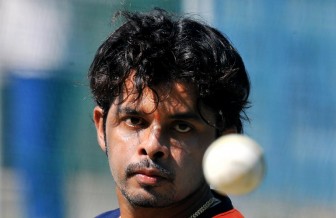
Caught in a fix: Sreesanth on his way out
Personally, as temperamental as Shantakumaran Sreesanth may be, I'd never in the wildest of my dreams imagined that he'd throw away his career in such a trifling. But perhaps he was frustrated. Perhaps he was miffed at having been overlooked in favor of comrade Irfan Pathan for the Champions Trophy in England. And perhaps he wasn't as optimistic as the rest of us and thought his India career was now truly over.

Those harboring that last thought are precisely those who are most vulnerable to be booked by the bookie. There are so many of them out there in the IPL. First things first, there is little sentimental value to loyalty in the IPL. In the IPL, a sportsman becomes a corporate employee - not something you'd want in the ideal and certainly not something a sportsman should get used to. You can't expect a young man from Jharkhand or Uttar Pradesh to identify himself with the red and gold of a Vijay Mallya owned team based in Bangalore as he would perhaps with the colours of Team India. So lest this young man is Vijay Mallya's good friend or falls in love with his adopted city in a matter of days, where is the loyalty?

The good thing with young men though is that they are highly ambitious and always roam in search of moments of childhood fantasy. The force of motivation then comes from the fact that turning in a series of good performances for the Chennai Super Kings or Rajasthan Royals may see you gain the coveted India jersey. And thus were born the likes of Ravichandran Ashwin and Ravindra Jadeja - symbols of the IPL's true success in unearthing latent talent. But what if age has caught up with you? In modern cricket's intense competitiveness, a zillion Indian players are lost in the domestic circuit. These men, on the wrong side of 25 or 30 are the most vulnerable to fixing. Seeing that there is little to lose and in the quest for some quick extra bucks, many second or third tier Indians outside the international spotlight are easily netted by crafty bookies for their cause.

The troubling part for the ever-passionate Indian cricket fan is that it's really difficult to grasp the idea that the IPL always was and always will be a corporate tournament. The IPL was never meant to grow into the competitive play field that club football is. Never mind the Gayle storms and Dale storms, you still want to see every man on the field give everything he's got every ball he bats, bowls or fields. That's the true essence of sport. It's "unscripted entertainment". Is this sport then?

Thursday, 18 April 2013

Why I watch the IPL

Unlike its counterpart in the football world and elsewhere, club cricket took an extremely long time to find public favor as compared to international cricket. In fact, cricket is one of those few 'high-profile' sports today that has had far larger and more enthusiastic following when played at the international level rather than at the club level. Are cricket fans more nationalistic then? Perhaps.

Cricket is a game that's largely limited to the Commonwealth of nations - former British colonies who try to show their former masters that they're better at it than they are. Not many people alive today would take keen interest in reading about the first ever international game of cricket played. No, it wasn't the famous game between Australia and England at the Melbourne Cricket Ground. In fact, the first game of international cricket ever played was in the year of 1844 in the unlikely city of New York (most things worthwhile seem to happen there somehow) between the unheard of national teams of the United States of America and Canada. But that's not how it was marketed; the game was billed to be between "the United States of America and the British Empire's Canadian Province." The Empire won by 23 runs.

The famous game at the MCG was in fact the first ever test match played - in 1877. Australia, of course, won that game. And then came the Don Bradman era of the Invincibles. Part of the reason Sir Don was so popular in all parts of the British Empire - except England, of course - was because he stood for exactly what cricket enthusiasts in the colonies wanted to show - that they can play the game far better than their rulers. The rivalry has diversified thereafter and nations of the Commonwealth now slug it out against each other with great intensity - particularly India and Pakistan - every time they have a point to prove to the other.

T20 cricket has brought about a change in the cricketing world, helping the growth of club cricket courtesy of domestic leagues like the IPL and the Big Bash. The old-timers have complained about the loss of nationalistic feelings on the cricket field, the divisive nature of regionalistic sentiments (especially in India), and even at times about the danger of 'match fixing' brought about by the infinite amount of cash out on play. They talk of how the good old 'gentleman's game' is becoming more materialistic and less traditional, almost mocking its great legacy built over the better part of two centuries. They also talk of how young talent is corrupted by being exposed to the waves and fortunes of high-speed T20.

Childhood Fantasy: Mumbai's Ponting-Tendulkar pair
As a fan who is often wont to side with the old-school, I to a large extent agree with these old-timers. But it doesn't stop me from watching the IPL. If anything at all, it only turns me from being a fan to being a spectator. I'm the old cricket-loving Indian nationalist who puts the pride of my motherland over the fortunes of a Kolkata team that has a South African in it or a Bangalore squad that has a West Indian dominating it. But it still doesn't stop me from watching the IPL. Because there are a number of things that the IPL and T20 in general give me that classic old international cricket doesn't: the throb of fast-paced entertainment. Nowhere else will I be able to see Ricky Ponting and Sachin Tendulkar walking out with bats in hand together. Nowhere else will I get to see Dale Steyn furiously peppering Jacques Kallis with hard-core bouncers. Nowhere else will I also get to witness Lasith Malinga and Chris Gayle expressing their talent without the pressures of international rivalry and an over-nationalistic media behind them. There is a certain thrill in watching the game merely for taking in the splendid joys of a bunch of legends showcasing their class. Compare if you'd like Rahul Dravid's free-wheeling captaincy of the Rajasthan Royals as opposed to his constricted, tentative leadership of Team India.

So I may not love Gautam Gambhir's Kolkata Knight Riders as much as I love MS Dhoni's Team India. I certainly won't express frustration over KKR's failures as I do with Team India's downfalls. And that's how it's supposed to be. The latter has far more history behind it than the former. The latter also directly represents my nation, my people and myself. But it doesn't really mean that I shouldn't watch the former, just for the kicks of uninhibited
entertainment.